
Success of the 3rd flight of the PILOT stratospheric balloon experiment
The third launch of the PILOT balloon took place on the morning of 24 September (5:36 Local time, 9:36 UT) from the tarmac at Timmins Airport, Ontario, Canada. After 3 hours of ascent, the instrument reached an altitude of ~38 km by day, and ~34 km by night. The flight lasted 25 hours, including one hour dedicated to instrument settings and 20 hours of scientific observations on the ceiling.
All flight systems behaved in a nominal manner. The scientific instrument also performed as expected. In particular, we used a He3-He4 refrigerator developed more than 20 years ago for the Pronaos experiment, which allowed the detectors to cool to lower temperatures than on the two previous flights (between 295 mK and 300 mK), without requiring in-flight recycling. A preliminary inspection of the data obtained indicates that they are of very good quality.
The instrument completed its flight 900 km northeast of Timmins, just north of Montreal. The nacelle landed only 200 m from the shore of a lake, and fortunately on the dry side of it. The nacelle was brought back to Timmins by the Franco-Canadian recovery team, dried and cleaned, and is currently on its way to Toulouse. A preliminary inspection indicated that the scientific instrument did not suffer, with the exception of minor and localized scratches on some optical surfaces.
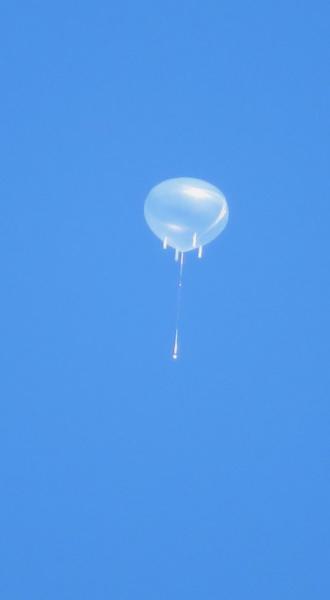
This flight made it possible to observe all the astrophysical sources that justified this flight, in particular the Crab Nebula, the Andromeda Galaxy (M31) and several star formation regions and Galactics of interest. The entire scientific team is enthusiastic about analyzing these new data, in particular by combining them with the data obtained during the first flight of the instrument, which could not be used in isolation.
Photos and films from the launch can be viewed here : https://twitter.com/louvelstephane?lang=fr
Many thanks to the CNES balloon division for the success of the operations, and to the laboratories whose efforts contributed to the perfect functioning of the instrument.
IRAP Contact
- Jean-Philippe Bernard, Jean-Philippe.Bernard@irap.omp.eu