
The COMETS symposium : a wonderful success
The symposium “COMETS, a new vision after Rosetta and Philae” organized by the CNES and the IRAP (Université Paul Sabatier of Toulouse & CNRS) with financial support from ESA, was successfully held from 14 to 18 November 2016 at the Musée des Abattoirs in Toulouse.
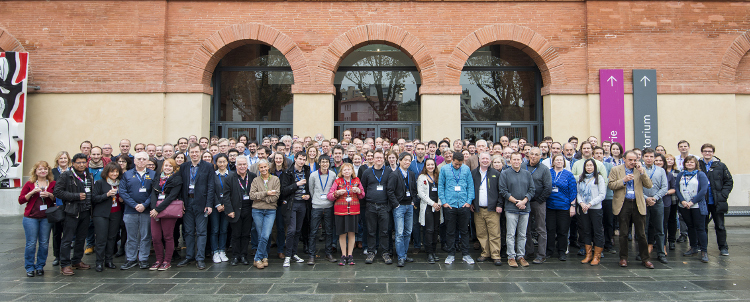
A total of 195 participants representing 21 countries and more than 80 different organizations were hosted. Among the most represented nations were of course France (50 participants), Germany (35) and the United States (27)! Japan (3), Israel (3) and Iran were also involved!
Another noteworthy fact was the participation of a large number of young researchers and doctoral students – the heirs of this generation of scientists who contributed to the development of the Rosetta space mission dedicated to the in situ study, for more than two years, of comet 67P/ Churyumov-Gerasimenko.
To date, three months after the end of the Rosetta mission, only 5% of the data collected has been thoroughly analyzed and has led to the publication of hundreds of articles – at a rate of 150 per year! A special issue of the Monthly Notices of the Royal Astronomical Society will follow the COMETS symposium.
This symposium was punctuated by very interesting presentations and particularly fruitful exchanges that testify to the dynamism of the scientific community concerned, its enthusiasm and its willingness to decipher the different stages of the formation of our Solar System.
Further Resources
- Website dedicated to the Conference : http://www.comets2016toulouse.com/
IRAP Contact
- Jérémie Lasue, jlasue@irap.omp.eu