
Review of the Nanosatellites day – IRAP Thematic Day on Nanosatellites, 11 July 2017
IRAP welcomed on July 11th for its Nanosatellites Day, about fifty people from OMP, LAAS, ISAE, ONERA, LCAR and other partners companies.
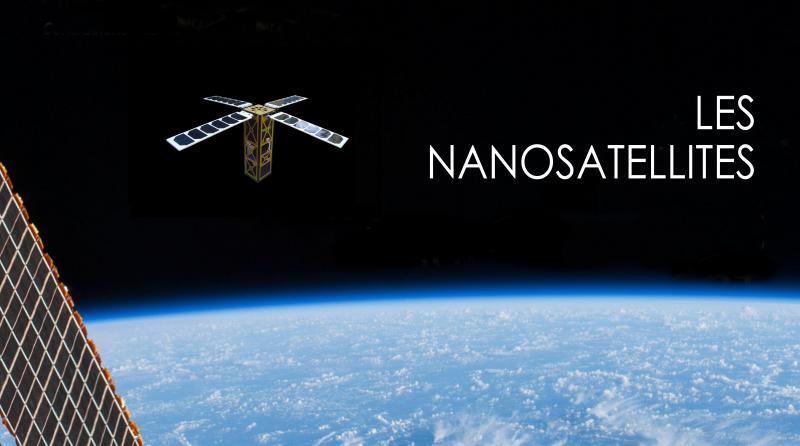
After recalling the theories of innovation developed since the 1930s, Anthony Pradels, (Aerospace Valley) showed to what extent nanosatellites (or cubesats) could create a break in access to space, largely dominated by space agencies. In this perspective, mostly implemented in the USA, Europe (Germany, Italy, etc.) or Asia (China, Japan, Russia), the expected performances, compared to the long, costly and extremely complex projects of today’s space missions, are more modest, more focused on emerging technologies to be tested in space.
Alain Gaboriaud, in charge at CNES of the JANUS project (Jeunes en Apprentissage pour la réalisation de Nanosatellites au sein des Universités et des écoles de l’enseignement Supérieur), then described the objectives of the project, i.e. to accompany students who are embarking on space projects and to introduce them to space techniques. A number of university space centres had been set up on the national territory in which laboratories and companies were partners.
The more technical part was addressed by Jean-Luc Le Gal, from the PASO of the CNES (Plateau d’architecture des Systèmes Orbitaux). He described the concurrent engineering tools of this technical platform to model satellites or nanosatellites. Although these tools are designed to design satellites and describe missions, they are also used to describe payloads and the instruments that make them up. The audience present in the room quickly saw the advantages that they could derive from these tools: at the scientific level to have a convincing modelling when proposing a mission and at the technical level in the dimensioning of instruments on board satellites, especially in terms of power and mass budget and mechanical constraints.
Training sessions on these tools can be organised at CNES to become familiar with the tools, which can be made available in the laboratories.
Oral presentations
- journee nanosat_innovation.pdf 1.79 MB
- journee nanosat_Janus.pdf 2.25 MB
- journee nanosat_ingenierie.pdf 2.77 MB
IRAP Contacts
- Martin Giard, martin.giard@irap.omp.eu
- Laurence Lavergne, laurence.lavergne@irap.omp.eu
- Baptiste Mot, baptiste.mot@irap.omp.eu