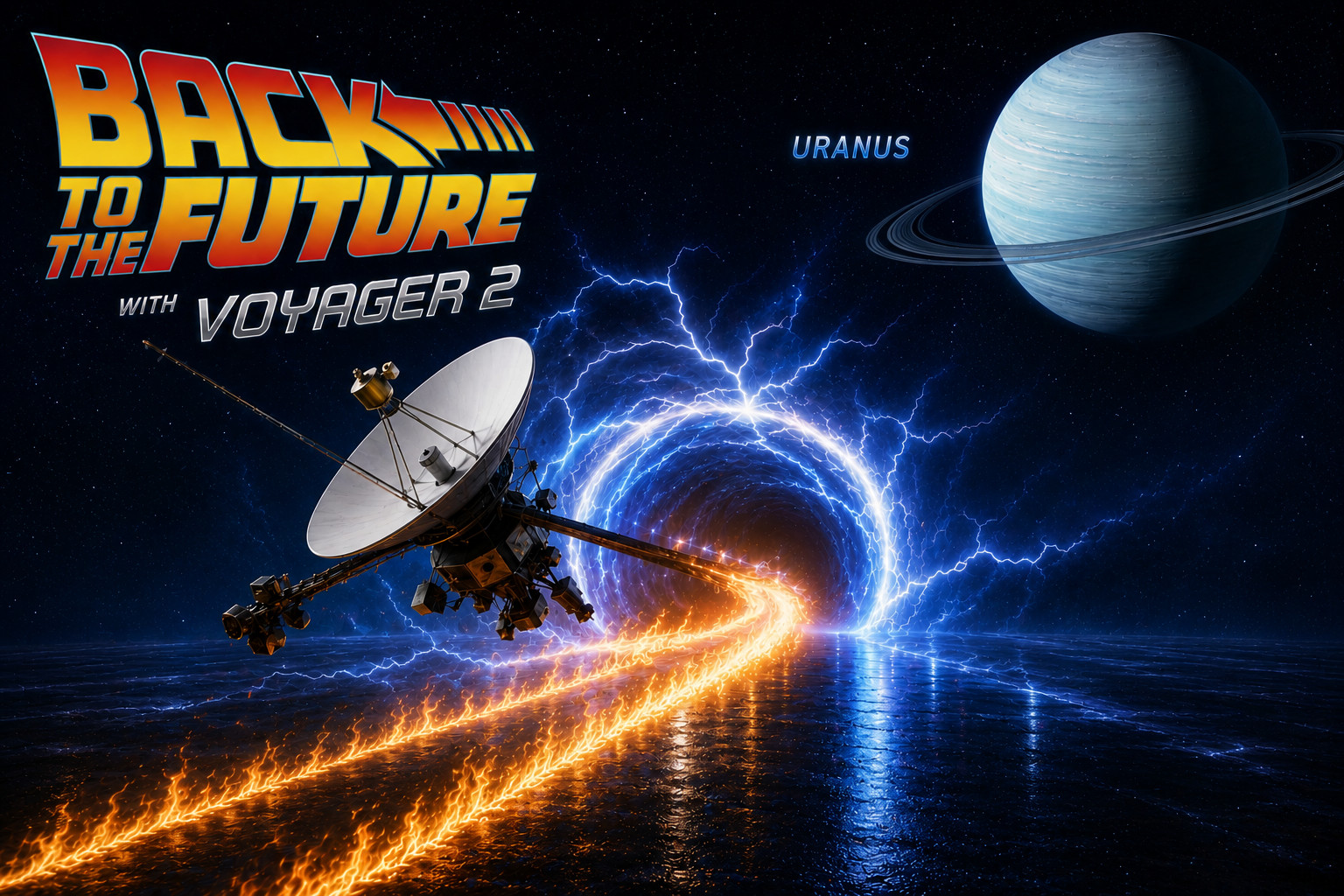
Back to the Future: viewing Uranus through an ENA camera
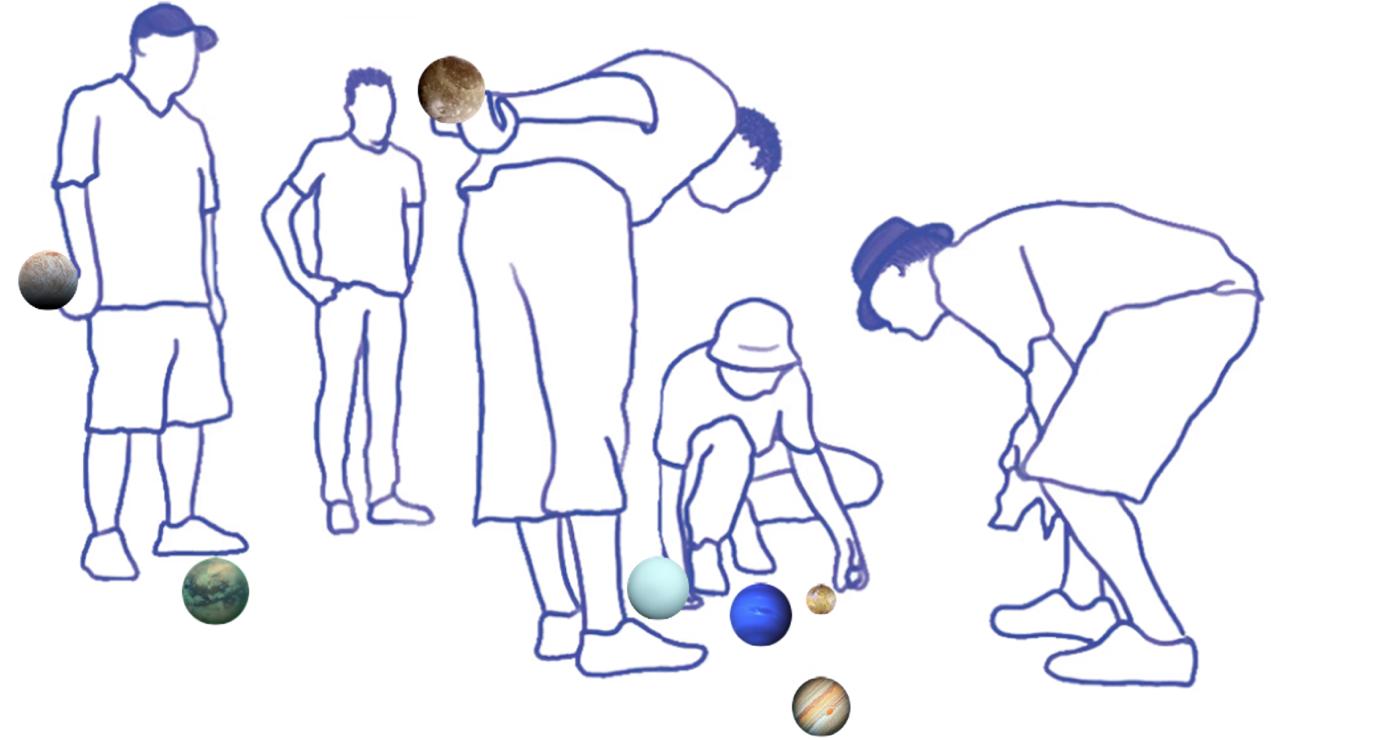
The Voyager 2 flyby of Uranus in 1986 portrayed a magnetospheric system now viewed as the reference for an extreme, asymmetric magnetosphere in our solar system. Flying a typical ENA […]
News
The Voyager 2 flyby of Uranus in 1986 portrayed a magnetospheric system now viewed as the reference for an extreme, asymmetric magnetosphere in our solar system. Flying a typical ENA […]
News
Silicon carbide is a major component of stellar dust. Experimental simulations using the Stardust machine (ICCM-Madrid) have shown that silicon carbide nanograins can form from carbon and silicon atoms, and […]
News
The SVOM (Space-based multi-band Variable Object Monitor) mission officially began its operational phase on April 23, 2025. The review panel for our first operational review (REVEX), held at the IAP […]
News
The structure and dynamics of the Martian mantle are still poorly understood. Recently, a team of researchers proposed that Mars’s mantle contains a large number of heterogeneities inherited from the […]
News
An international team comprising scientists from CNRS Terre & Univers and CNRS Physique observed an exceptional blue aurora at mid-latitudes, revealing unprecedented conditions of interaction between solar particles and the […]
News
An international scientific team, including scientists from IRAP and led by LPP, has revealed, using data from the Cassini mission, that the interaction between Saturn and its moon Enceladus is […]
News
The NectarCAM collaboration meeting took place from February 2nd to 4th, 2026, in the IRAP conference room. This meeting brought together all the project stakeholders from 16 European laboratories responsible […]
News
At IRAP (CNRS, CNES, University of Toulouse), the AROMA molecular analyzer, a highly sensitive mass spectrometer employing a two-step laser desorption/laser ionization technique, enables the study of exceptional samples: grains […]
News
Just 11.4 light-years away, two exoplanets have been detected around a nearby star. One of them, Gl725Bc, is located in the habitable zone and is now the second closest potentially […]