
The PLANCK collaboration receives the 2018 cosmology prize from the Gruber Foundation (Yale University). IRAP’s PLANCK team (Toulouse) is one of them!
With the 2018 award of the Cosmology Prize of the Gruber Foundation to the entire PLANCK space project team (https://gruber.yale.edu/cosmology/2018/planck-team), the PLANCK team of the Institut de Recherche en Astrophysique et Planétologie (IRAP: CNRS-UPS-CNES) in Toulouse is also honoured this year by a scientific prize of very high renown.
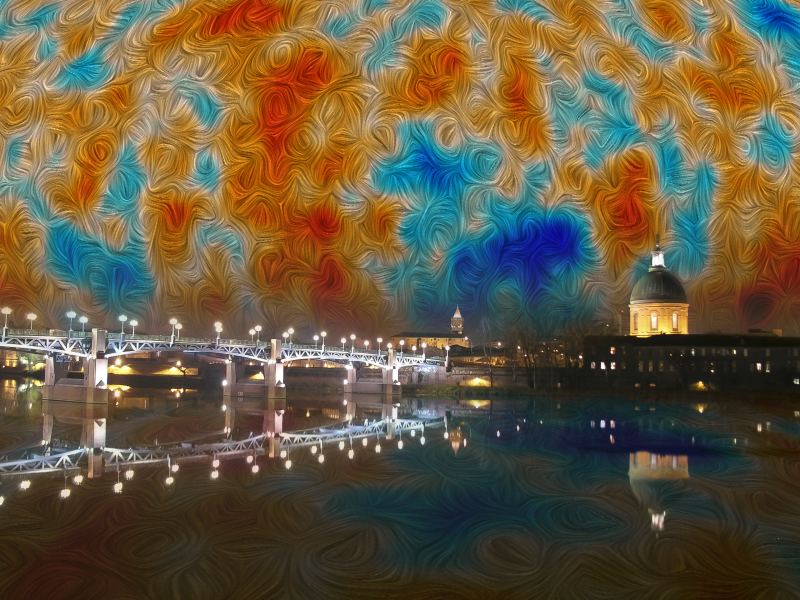
This prize awarded by the Yale University Foundation (USA) rewards each year an eminent scientific personality for a theoretical or observational discovery that has led to a fundamental advance in our understanding of the Universe. This is what the PLANCK collaboration has done by performing a novel measurement of the fossil radiation background over the entire celestial vault, giving us the first direct insight into the physics of the Big Bang, and at the same time bringing us into the era of high-precision cosmology.
Since November 1993 at the Centre d’Etude Spatiale des Rayonnements (which became IRAP in 2011), the infrared astronomy team (“Cold Universe”) has been involved in the formation of the international consortium that carried, built and operated the PLANCK space mission (see list below). At the technical level, the team invented and developed the on-board electronic systems located at the heart of the instrument and which ensured the control and reading of the HFI (High Frequency Instrument) detectors to the nano-degrees-Kelvin range throughout the mission, from 2009 to 2013. At the scientific level, the team has been a leader in the exploitation of PLANCK data in the field of physics of our Galaxy and “cold” astrophysical objects whose apparent temperature is close to absolute zero. Responsible for the constitution of the catalogue of galactic and extra-galactic “cold objects”, she has enabled the consortium to obtain quite remarkable results, discovering in particular a new class of distant extra-galactic objects that are cold only in appearance since they are in fact most often the first star formation flare-ups that appeared 2 to 3 billion years after the Big Bang and that prelude the formation of the very large clusters of galaxies visible in the Universe today.
The PLANCK mission, and its Toulouse contribution, would never have seen the light of day without the pioneering talent and scientific vision of Guy Serra, director of research at the CNRS, who died prematurely in August 2000.
Members of the Planck team at the CESR and at the l’IRAP :
- D. Alina, M. Alves, J. Aumont, A.J. Banday, J.P. Bernard, P. Bielewicz, J. Brossard, J.P. Chabaud, I. Flores Cacho, O. Forni, A.M. Fréval, M. Giard, J.M. Glorian, T. Jaffe, J. Landé, Ch. Leroy, A. Mangilli, D. Marshall, Ch. Marty, W. Marty, L. Montier, J. Narbonne, M. Nexon, F. Pajot, R. Paladini, C. Parisel, E. Pointecouteau, R. Pons, D. Rambaud, I. Ristorcelli, A. Sauvé, G. Serra