
X-IFU week in Madrid is over
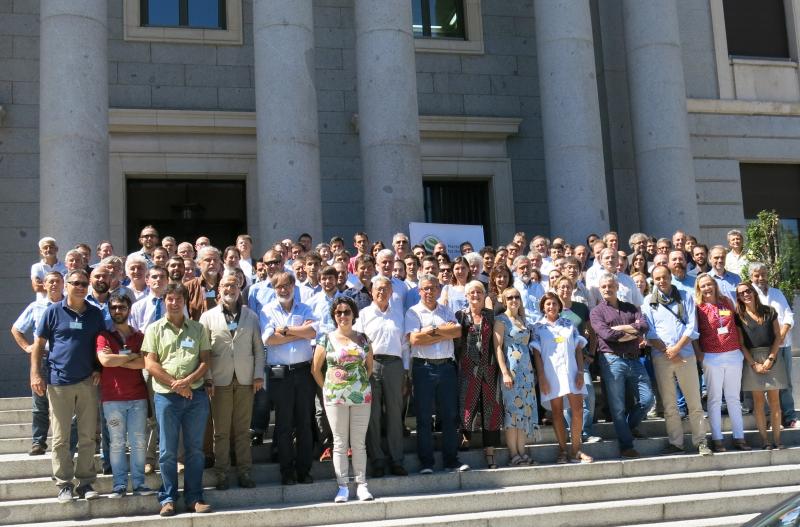
The sixth X-IFU consortium meeting took place from September 11th to 15th in Madrid at CSIC headquarters. It was hosted by Miguel Mas Hesse (CAB-INTA) and his team, during a very sunny, hot and beautiful week in Madrid.
More than 120 X-IFU team members participated in the 18 splinters and the 1.5 days of the plenary sessions.
The splinter meetings covered several technical items (sub-systems of the instrument, e.g. the instrument control unit, the TES and readout chain, the power distribution unit, the dewar door), performance items (e.g. system, instrumental background, end-to-end simulator), science and calibration activities, as well as management.
The plenary sessions started from a report on the Cost Driven Reprogramming Exercise, followed by a presentation by ESA on the status of the Athena project. Then, a series of CNES presentations gave a broad view of the study status at instrument and system levels, detailing the current baseline design of the instrument which is in several aspects reaching a high level of maturity. Each sub-system manager then presented a status on the study activities, demonstrating again the breadth of the activities throughout the consortium. The second day of the plenary sessions started by a presentation by Luigi Piro (IAPS) on the transient Universe as will be probed by Athena, a presentation by Matteo Guainazzi (ESA study scientist) on the science requirements, and a status report on WFI by Arne Rau (MPE). Several presentations related to the instrument performance followed. Overall, the quality and depth of the different presentations demonstrated not only the skills of the team, but also its motivation and dedication to meeting the very ambitious and demanding performance of the instrument.
The X-IFU Consortium meeting #7 will be in Paris (ApC) in March 2018 and will also be spread over a week.
Further Resource
- Dedicated Website : http://x-ifu.irap.omp.eu/
IRAP Contact
- Didier Barret, didier.barret@irap.omp.eu