The influence of Ganymede’s magnetosphere seen right down to its auroral footprint on Jupiter
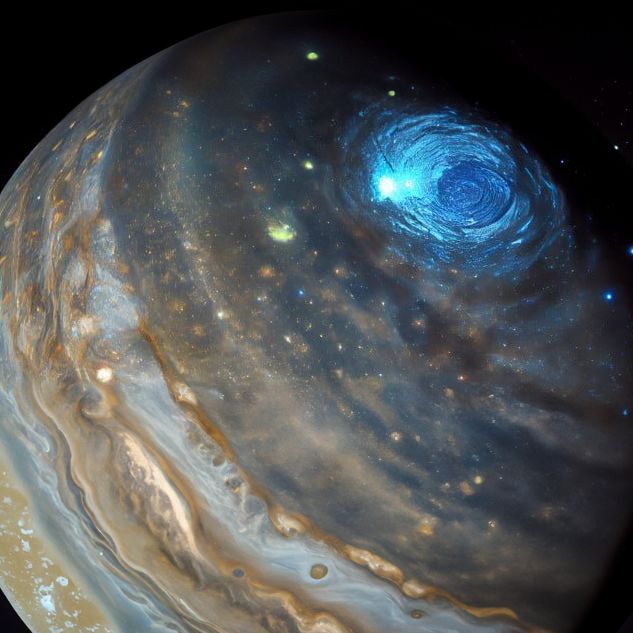
Jupiter has the brightest aurora in the solar system. A particular feature of this planet, which it shares with Saturn, is also the auroral emissions caused by three of its […]
The French DORN instrument successfully completes its lunar mission aboard the Chang’E 6 lunar probe
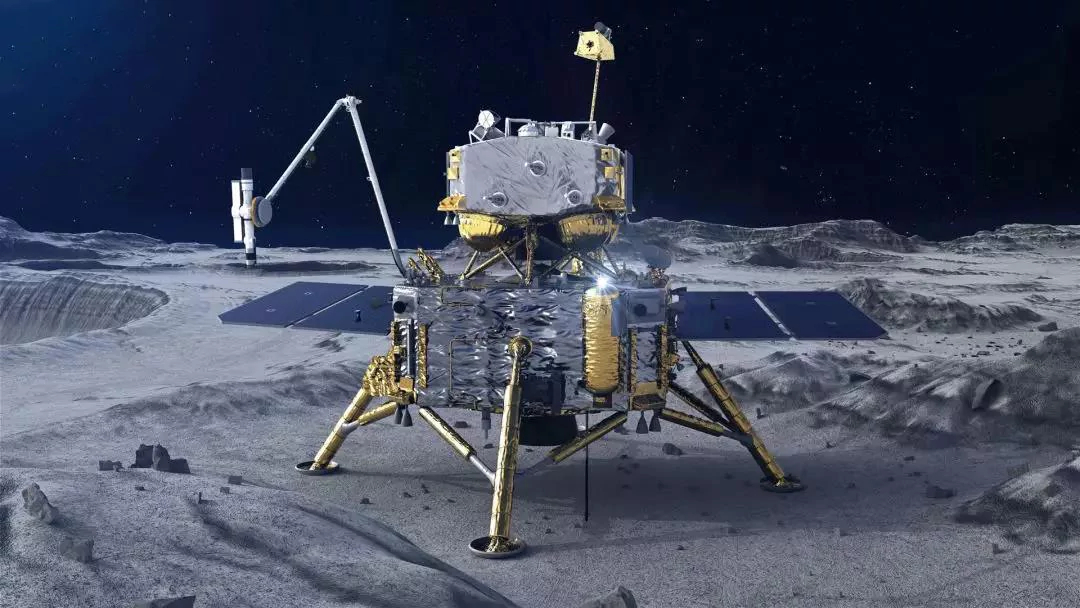
Launched on May 3 aboard a Long March 5 rocket from the Wenchang site, China’s Chang’E 6 probe completed a successful mission to the far side of the Moon, and […]
The icy moon Ganymede has its own radiation belts!
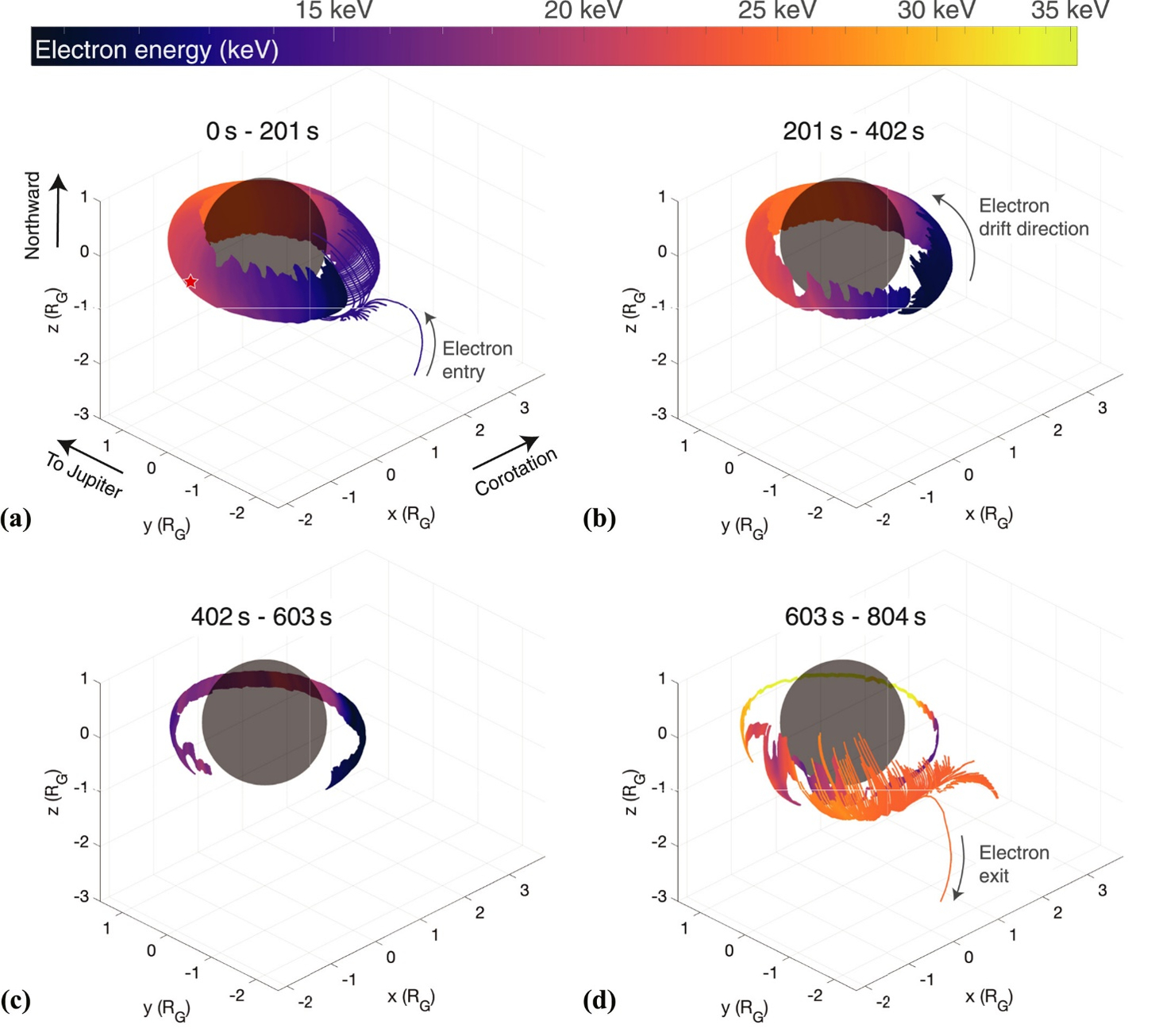
The magnetic field of a planet can trap energetic charged particles in donut-shaped « radiation belts ». In order to better understand the formation of planetary radiation belts, a team of researchers […]
ESO signs a construction agreement for the ANDES instrument on the ELT
ESO today signed an agreement with an international consortium of institutions for the design and construction of ANDES, the ArmazoNes high Dispersion Echelle Spectrograph. The ANDES instrument will be installed […]
Visit of chinese delegation to IRAP, Mars and beyond !
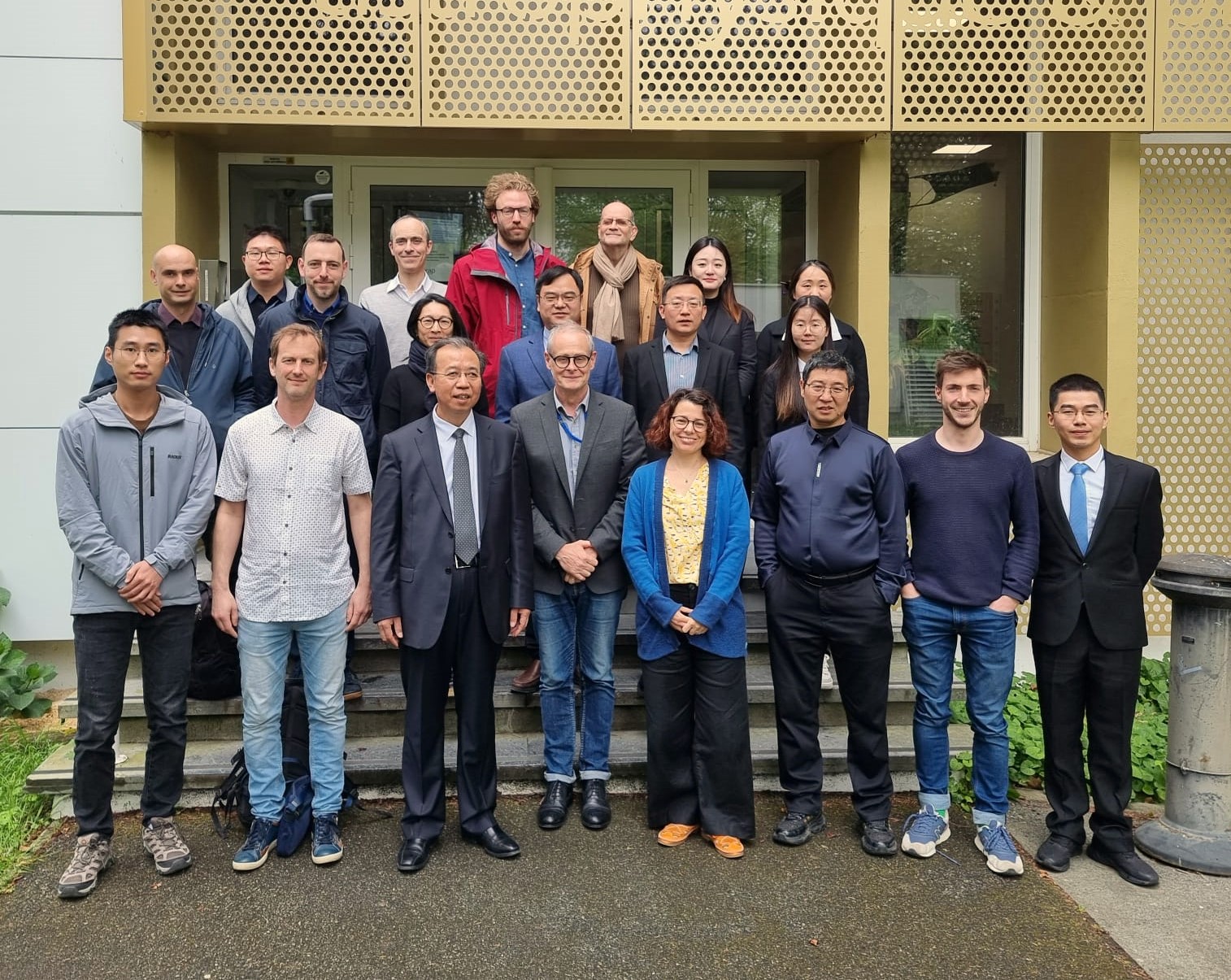
A Chinese delegation from the Chinese space agency CNSA and other laboratories, led by Jizhong LIU, chief engineer of the future Mars mission Tianwen-3, visited us on April 10. Among […]
DORN: Objective Moon … reached !
In order to follow the DORN mission as closely as possible – from the launch of the Chang’E 6 rocket on May 3, 2024 to in situ experimentation and the […]
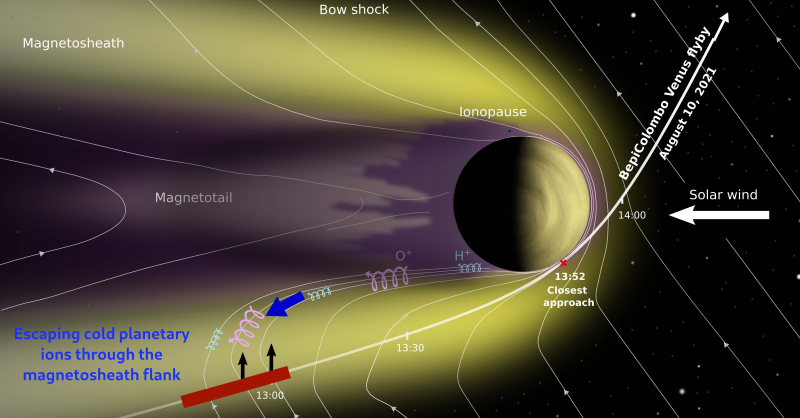
Venus releases oxygen and carbon into space
Venus, unlike Earth, has no intrinsic magnetic field. As a result, the solar wind interacts directly with its atmosphere, accelerating charged particles that can escape into space. In situ measurements […]
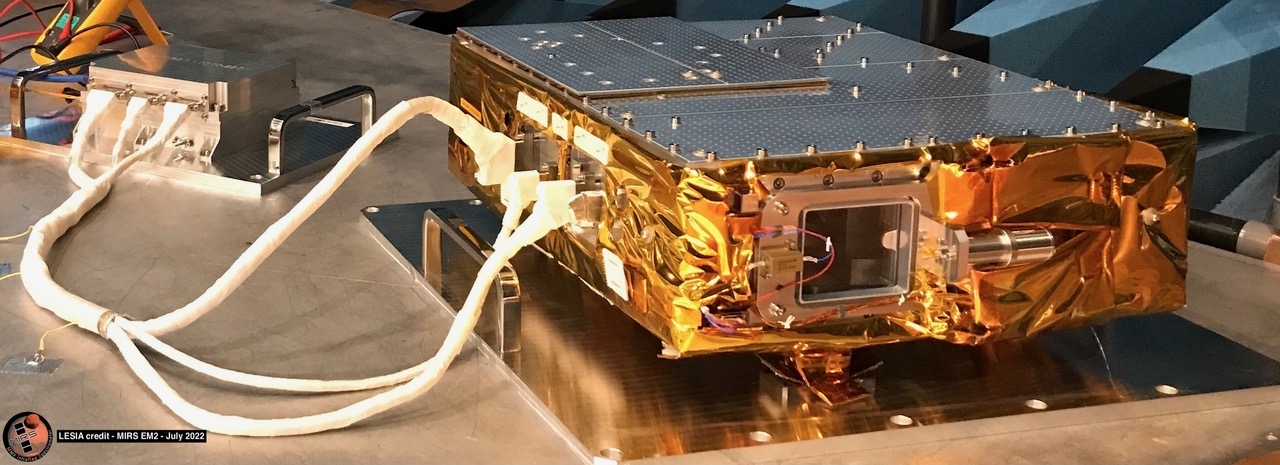
MIRS: departure for Japan
MIRS, a small instrument weighing just ten kilos, is a veritable jewel of technology developed in just 4 years. Developed collectively by CNES, LESIA, LAB, LATMOS,OMP andIRAP, it will play […]
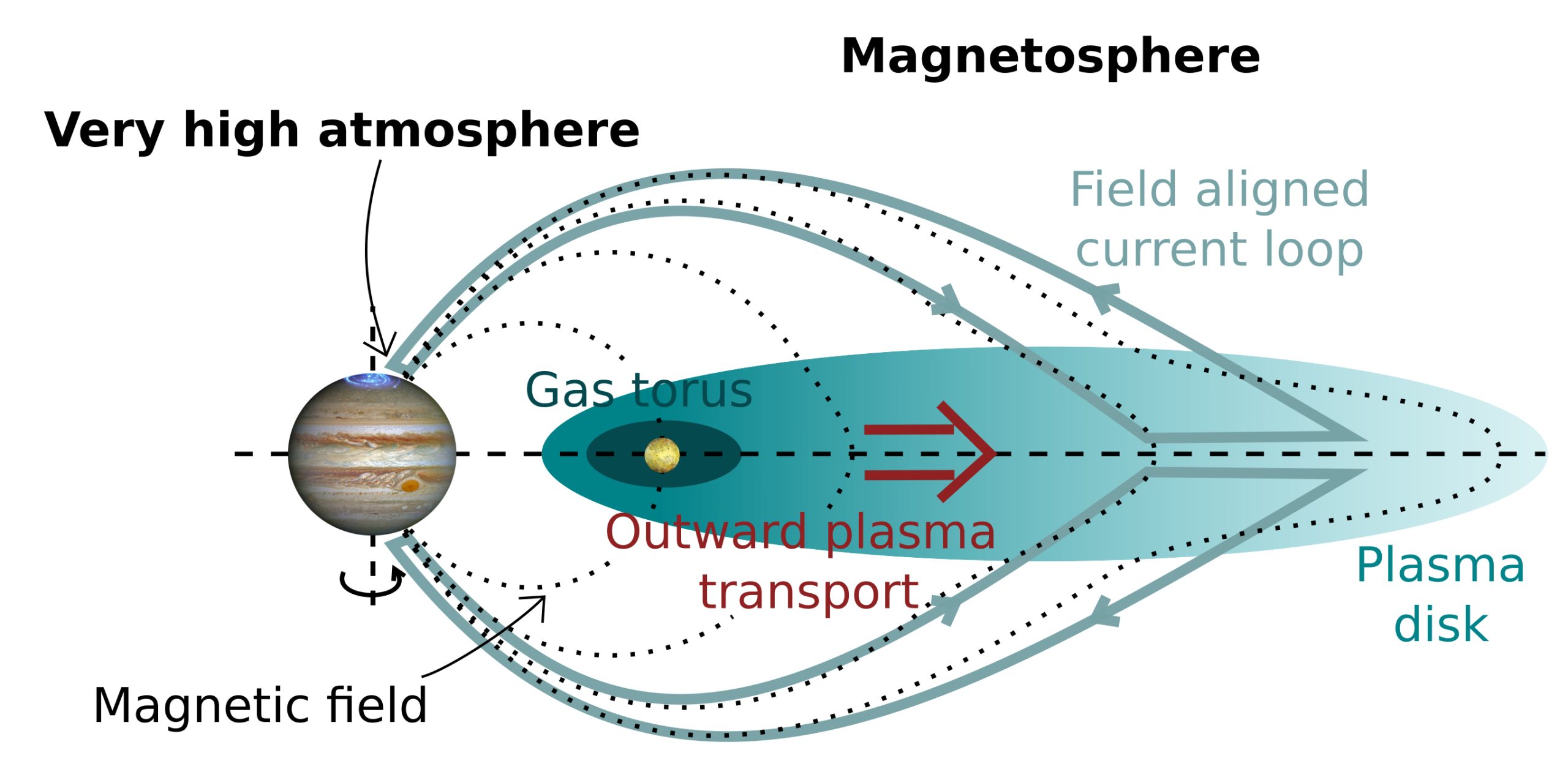
Jupiter and Saturn: a new theoretical model of giant magnetospheres
The giant planets in our Solar System are extremely complex systems. They are first characterized by their intense magnetic field, which creates a magnetic cavity, the magnetosphere, protecting their direct […]
Nous utilisons des cookies pour vous garantir la meilleure expérience sur notre site web. Si vous continuez à utiliser ce site, nous supposerons que vous en êtes satisfait.